
Pool Decks & Surrounds
Concrete Pool Decks & Surrounds in North Vancouver
A pool deck is the one slab in your yard that people walk on wet, barefoot, and often in a hurry. That changes everything about how we build it. Here's how we approach concrete pool decks and surrounds on the North Shore — the finish, the coping, the drainage, and the mix and sealer that survive our chlorine, salt, rain, and freeze-thaw.
A pool deck is not a patio — start with slip resistance
The single biggest mistake we see around North Shore pools is a slick surface. A smooth steel-troweled or glossy finish looks great dry and turns into a hazard the moment a wet foot lands on it. A pool deck needs texture you can feel, chosen for bare feet — grippy enough to be safe, but not so aggressive it shreds skin when kids sprint across it.
The finishes we reach for most:
- Light-to-medium broom finish — the workhorse. Dependable traction wet, low maintenance, and the most economical. A finer broom drag keeps it comfortable underfoot while staying safe.
- Exposed aggregate — excellent grip and a beautiful natural-stone look, but honestly rougher on bare feet and it soaks up heat in full sun. Great in the right spot, less so as a full sunbathing surround.
- Honed or lightly ground with a matte, non-film sealer and a grit additive — a refined look that we make safe on purpose rather than by accident.
What we avoid is a glassy trowel finish or a slick solvent-acrylic sealer with nothing worked into it. If you want a decorative surface, we detail it for traction from the start. Our exposed concrete finishes page walks through the finish palette in more depth, and for general flatwork away from the water our patios and walkways page covers the rest of the yard.
Coping: the detail that makes or breaks the pool edge
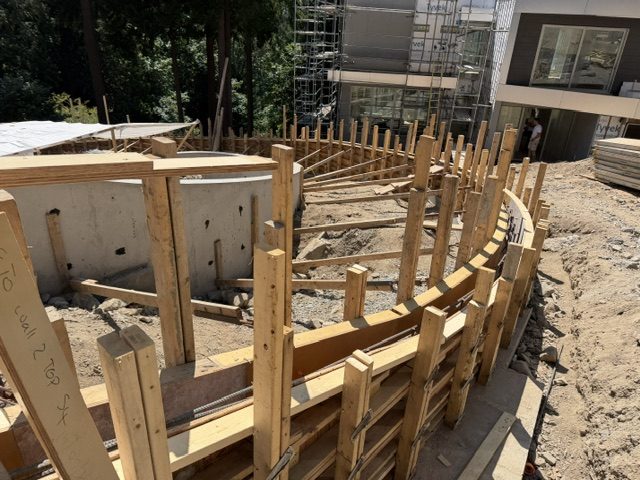
Coping is the band that caps the pool shell and meets your deck — the edge you grab, sit on, and stub a toe against. It deserves real attention. Cast-in-place cantilever coping gives a clean, continuous concrete edge with no separate cap to lift or stain, and we form a rounded bullnose or eased profile so it's kind to hands and shins.
Two details matter more than the look. First, the coping should overhang the waterline slightly and pitch back toward the pool or gutter, so splash and rain shed into the water rather than wicking behind the tile line. Second — and this is where a lot of decks fail — there must be a proper expansion and isolation joint between the coping, the pool shell, and the deck slab. The pool and the deck are two separate structures that move independently. On the North Shore, where we sit in a seismic zone and the ground heaves with freeze-thaw, a deck poured tight against the coping will crack along that edge. We separate them by design.
Drainage away from the pool — and jointing that controls the cracks
North Shore rain is relentless, so every pool deck we build is graded to move water. The whole surround slopes gently away from the coping so pool splash-out and rainfall don't pond at the edge or run back into the pool. Where the deck meets the house, a retaining wall, or a low point on a stepped lot, we set channel or trench drains and tie them into a real stormwater outlet — not just spilling onto the slope below, which over time undermines footings and, on our steep rocky lots, feeds erosion.
Then there's jointing. Concrete moves and concrete cracks; good work decides where. We lay out control joints on a sensible grid so shrinkage cracks land in tooled lines instead of wandering across the field, and we place isolation joints wherever the deck abuts something rigid — the coping, the house, posts, and any retaining walls holding the grade. Underneath it all, the part you never see does the heavy lifting: a compacted base, free-draining rock, and steel reinforcement sized for the span. On elevations that actually freeze — the British Properties, upper Capilano, the slopes toward Grouse — that base and that air-entrained mix are what keep water from prying the slab apart.
Salt, chlorine, freeze-thaw — the right mix and the right sealer
A pool deck lives in a chemical bath. Chlorine splash, salt-system spray, and standing rainwater all attack ordinary concrete, and then our winter freeze-thaw cycles work any moisture that gets in. The defense starts in the mix, not the sealer. We spec air-entrained concrete — the tiny air bubbles give freezing water somewhere to expand — with a higher strength and a low water-to-cement ratio for density, and we let it cure properly rather than rushing it in our damp climate.
Sealing is the second layer. For chlorine pools, a quality breathable sealer with anti-slip grit worked in does the job. For saltwater pools, we favour a penetrating silane/siloxane sealer that blocks chloride from soaking in, because a surface film alone won't stop salt-driven pitting and scaling over the years. Sealer is maintenance, not a one-time event — it wears and gets reapplied on a cycle. A sealed deck also resists the algae and grime that shaded, forested North Shore lots throw at it, but we always keep the traction: a deck that's safe dry and lethal wet is not sealed correctly.
Heat and comfort: choosing colour for your specific lot
Colour isn't just style on a pool deck — it's whether the surface is walkable at 2pm in July. Dark integral colours and dark aggregates look rich but absorb sun and get genuinely hot on bare feet. Lighter buff and grey tones stay noticeably cooler. The catch is that very pale decks show dirt, leaf tannin, and algae faster, which matters on a shaded, tree-ringed lot.
So the right answer depends on your yard. An open, sunny West Vancouver surround with afternoon exposure usually wants a lighter, cooler tone; a shaded North Vancouver lot under cedars can carry a mid-tone that hides debris without cooking underfoot. We talk this through against your actual sun and shade before anyone picks a colour. You can see how we handle these choices across the North Shore on our North Vancouver and West Vancouver pages.
What drives the cost of a concrete pool deck
We don't quote numbers sight-unseen — every pool and lot is different. But it helps to know what actually moves the price so you can weigh choices before we come out:
- Size and shape — square footage, plus how many curves and radiused edges follow the pool.
- Finish — a broom finish is the most economical; exposed aggregate, honing, and decorative work add labour and material.
- Coping type — cast-in-place cantilever coping versus a separate cap changes the forming work.
- Site access — this is the big North Shore variable. A steep, tight lot may need a concrete pump instead of a chute, which costs more than a flat driveway pour.
- Demolition and drainage — tearing out an old deck, prepping subgrade, and adding trench drains or a stormwater tie-in all add scope.
- Reinforcement, colour, and sealer spec — heavier steel, integral colour, and a premium salt-rated sealer are worth it and they factor in.
- Protecting an existing pool — working carefully around a finished pool takes more time than an open new build.
We'd rather explain the trade-offs than surprise you. If you're planning a pool deck or surround, see our architectural concrete services for how we work, then get in touch or call (778) 882-8001 and we'll walk your site with you.
Frequently asked questions
What's the safest finish for a concrete pool deck?
For wet bare feet, a light-to-medium broom finish is the reliable, economical choice — the broom texture grips when wet and needs little upkeep. Exposed aggregate grips well too but is rougher underfoot and hotter in sun. What we avoid is a smooth trowel finish or a glossy sealer with no anti-slip grit, which turns dangerous the moment it's wet.
Do I need a special mix or sealer for a saltwater pool?
Yes. Salt is harder on concrete than chlorine over time. We start with air-entrained, higher-strength concrete for freeze-thaw resistance, then seal a saltwater deck with a penetrating silane or siloxane sealer that blocks chloride from soaking in. A surface film alone won't stop salt-driven pitting. Sealer is reapplied periodically — it's ongoing maintenance, not one-and-done.
How should a pool deck drain on a rainy, sloped North Shore lot?
The whole surround should pitch gently away from the pool so splash-out and rain don't pond at the coping or run back into the water. Where the deck meets the house, a wall, or a low point, we add channel or trench drains tied into a proper stormwater outlet — never spilling onto the slope below, which undermines footings and causes erosion on steep lots.
Why does the deck crack right at the pool edge, and can you prevent it?
The pool shell and the deck are two separate structures that move independently, especially with seismic activity and freeze-thaw ground movement here. A deck poured tight against the coping will crack along that seam. We prevent it by installing a proper expansion and isolation joint between the coping, the pool shell, and the deck, plus a planned grid of control joints across the field.
What colour should I choose so the deck isn't too hot?
It depends on your lot's sun exposure. Dark colours and dark aggregate look rich but absorb heat and get hot on bare feet — lighter buff and grey tones stay cooler. But very pale decks show dirt and algae faster on shaded, forested lots. We match the colour to your actual sun and shade rather than picking from a chart, so it's comfortable and stays clean.
Have a project on the North Shore?
Bring us the idea or the drawings and we'll tell you honestly what it takes — with a fixed quote before any work begins.